
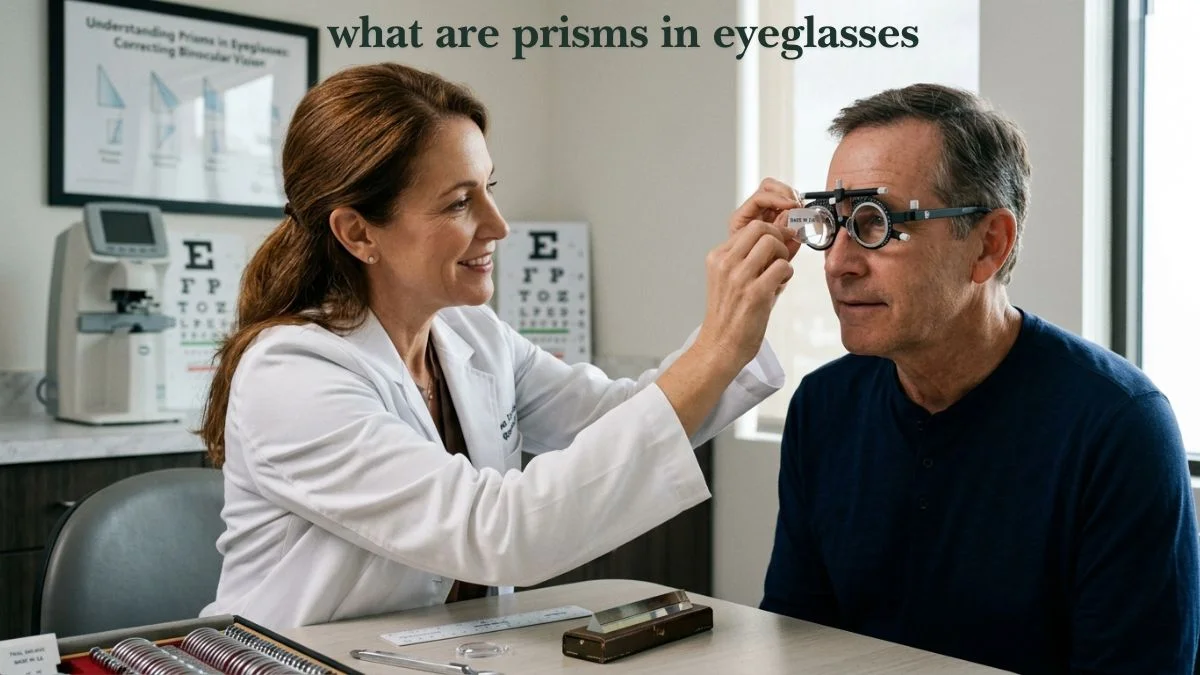
Understanding what are prisms in eyeglasses requires a deep look into optical physics and human neurology. Patients often feel confused when a doctor mentions prism correction for their vision needs. This technical whitepaper explores the mechanics, applications, and standards of prisms in eyeglasses in modern optometry. We will examine how these specialized lenses manipulate light to resolve complex binocular vision disorders. By the end, you will understand the critical role prisms play in visual health and comfort.
Defining the Motivation for Prism Correction
Users searching for what are prisms in eyeglasses typically experience significant visual discomfort or neurological symptoms. The primary motivation is often the resolution of diplopia, which is the medical term for double vision. When the eyes do not align perfectly, the brain receives two conflicting images from the environment. This misalignment causes physical strain, headaches, and a profound loss of depth perception in daily life. Consequently, patients seek a technical solution that restores single, clear, and comfortable binocular vision immediately.
Furthermore, many users are investigating symptoms related to Binocular Vision Dysfunction, also known as BVD. BVD occurs when the eyes have a physical or functional inability to work as a team. Subtle misalignments can lead to dizziness, light sensitivity, and even anxiety in crowded visual spaces. prisms in eyeglasses serve as the corrective bridge that allows the visual system to relax and synchronize. Therefore, the intent is both a search for relief and a desire for technical education.
The Physiological Need for Light Displacement
The human eye relies on precise light refraction to focus images onto the central fovea. However, muscle imbalances can pull the eye slightly off the intended visual axis. Prisms do not change the focus or power of the lens like traditional prescriptions do. Instead, they shift the perceived position of an object to match the eye’s natural resting point. This displacement reduces the constant muscular effort required to keep the eyes aligned correctly.
Addressing Chronic Visual Fatigue and Strain
Modern digital lifestyles have increased the prevalence of computer vision syndrome and related ocular stresses. Many individuals suffer from “near-work” strain that manifests as burning eyes or blurred text. Prism correction can alleviate the convergent stress associated with prolonged use of digital screens. By shifting the light path, prisms allow the internal eye muscles to maintain a more neutral state. This technical intervention provides a significant boost to productivity and overall quality of life.
Industry Standards: The Clinical Anchor for prisms in eyeglasses
The prescription of prisms must adhere to strict clinical guidelines to ensure patient safety and efficacy. In the United States, the American Optometric Association (AOA) provides the framework for binocular vision assessment. Clinicians must also follow the ANSI Z80.1 standard for prescription ophthalmic lenses to guarantee manufacturing accuracy. These standards define the allowable tolerances for prism power, measured in “prism diopters,” across different lens types. Strict adherence to these protocols ensures that every lens performs exactly as the doctor intended.
Moreover, the integration of prism correction often intersects with HIPAA regulations regarding patient diagnostic data. Since prism needs often stem from neurological conditions, data security remains a paramount concern for providers. The clinical pathway involves rigorous testing, including cover tests, Maddox rod evaluations, and Von Graefe techniques. These standardized tests quantify the exact amount of deviation present in the patient’s visual system. Standardized measurement units ensure that prescriptions are portable between different optical laboratories and clinics.
NOTE: Prism prescriptions involve complex neurological adjustments. Only a licensed Doctor of Optometry or Ophthalmology should determine the need for prism correction. Incorrect prism power can exacerbate symptoms or cause permanent changes to eye muscle coordination.
Quantifying Deviation with Prism Diopters
The unit of measurement for prism power is the prism diopter, symbolized by the Greek letter delta. One prism diopter represents a displacement of one centimeter at a distance of one meter. This precise measurement allows technicians to grind the lens to the exact specifications required for the patient. High-quality labs use computer-aided surfacing to maintain the integrity of the prism across the entire lens surface. Ensuring this accuracy is vital for preventing unwanted distortions or secondary visual aberrations.
The Role of ISO 8598 in Optical Instrumentation
ISO 8598 specifies the requirements for instruments used to measure the power of ophthalmic lenses. Lensmeters must be calibrated to detect even the slightest amounts of prism in a finished pair of glasses. This international standard ensures that patients receive the exact correction needed for their specific binocular imbalance. Quality control departments use these metrics to verify that lenses meet the prescribed refractive and prismatic values. Without these standards, the consistency of prism therapy would be impossible to maintain globally.
Feature-to-Value Mapping: Technical Specs to Real-World Benefits
Prisms function through the geometric properties of a wedge-shaped transparent medium that bends light toward its base. The most immediate feature of a prism lens is the redirection of the incoming light’s path. This feature translates directly into the value of image fusion for patients with strabismus or phoria. By moving the image to where the eye is pointing, the brain can merge two views. Consequently, the patient experiences a single, stable image instead of confusing and disorienting double vision.
Another technical feature is the ability to split the prism power between both eyes, known as “yoking.” Dividing the power reduces the thickness and weight of the lenses, improving the aesthetic appearance of the glasses. This mapping provides the value of enhanced comfort and better weight distribution on the wearer’s nose. Thinner lenses also reduce the “rainbow effect” or chromatic aberration often associated with high-power prisms. Therefore, technical distribution directly enhances the wearer’s daily experience and confidence in their eyewear.
Improving Spatial Awareness and Mobility
prisms in eyeglasses significantly improve a patient’s spatial awareness by correcting peripheral field defects or misalignments. For stroke survivors with hemianopsia, specific prisms can expand the perceived field of view. This technical feature allows patients to navigate environments safely without bumping into obstacles. The value of restored independence is immeasurable for individuals recovering from significant neurological events. Thus, prisms act as more than just vision aids; they are tools for functional rehabilitation.
Minimizing the Physical Impact of Lenses
High-index materials are often paired with prism prescriptions to manage lens bulk and density. Using materials like 1.67 or 1.74 index plastics allows for a slimmer profile despite the wedge shape. This feature provides the value of lighter frames that do not slip or cause pressure points. Advanced anti-reflective coatings are also essential features for prisms in eyeglasses to minimize internal reflections. These mappings ensure that the technical solution remains practical and wearable for the end-user.
Industrial Problem Solving: Addressing High-Value Vision Challenges
| Visual Challenge | Prism Technical Solution | Clinical Outcome |
| Vertical Diplopia | Base-Up/Base-Down Prisms | Vertical alignment of images and neck pain relief. |
| Convergence Insufficiency | Base-In Prism (Reading) | Reduced eye strain during near-task activities. |
| Field Neglect (Post-Stroke) | Peli Prisms or Fresnel Press-ons | Expansion of the functional visual field for safety. |
| Esophoria (Inward Drift) | Base-Out Prism | Relaxation of the lateral rectus muscles. |
One of the most complex problems in optometry is the management of vertical heterophoria. Even a tiny vertical misalignment can cause chronic migraines and unexplained balance issues. Prisms solve this problem by precisely offsetting the light to compensate for the vertical drift. This technical solution often eliminates the need for invasive surgeries or long-term pharmaceutical interventions for pain. By addressing the root cause of the misalignment, prisms provide a sustainable and non-invasive health outcome.
Furthermore, industrial applications of prisms extend to specialized occupational eyewear for surgeons and pilots. These professionals require perfect binocularity and depth perception to perform high-stakes tasks safely. Custom prisms can be integrated into loupes or visors to ensure focus is maintained during long procedures. This solving of “high-value” problems demonstrates the versatility and necessity of prismatic correction in various fields. Ultimately, prisms ensure that human error due to visual fatigue is minimized in critical environments.
Visual Logic: Comparing Prism Delivery Methods
Integrated vs. Fresnel Prisms
Integrated prisms are ground directly into the lens material during the manufacturing process at the lab. These provide the best optical clarity and are virtually invisible to the casual observer in most cases. However, they are permanent and cannot be easily adjusted if the patient’s condition changes rapidly. In
contrast, Fresnel prisms are thin, flexible plastic sheets that adhere to existing lenses using static electricity. While they offer slightly lower clarity, they allow for rapid testing and adjustment of high prism powers.
Base Direction Logic
The orientation of the prism base determines the direction in which the light is shifted. “Base-In” prisms have the thickest part near the nose to help eyes that struggle to turn inward. “Base-Out” prisms have the thickest part toward the ears to assist eyes that drift too far in. “Base-Up” and “Base-Down” handle the vertical misalignments that cause stacked or tilted double vision. Understanding this logic is essential for any technician or patient evaluating a new prescription for prism correction.
Implementation Roadmap: Your Journey to Clear Vision
The first step in obtaining prism glasses is a comprehensive binocular vision examination with a specialist. Be sure to describe symptoms like double vision, frequent tilting of the head, or chronic dizziness. The doctor will perform specific tests to measure the degree of misalignment in different gaze directions. Once the measurement is finalized, the doctor will write a prescription specifying the power and base direction. This roadmap ensures that the patient receives a highly tailored solution for their unique visual needs.
The second step involves choosing the right lens material and frame to support the prism power. Higher prism values often require thicker lens edges, so choosing a smaller, rounder frame is usually best. Plastic or acetate frames are preferred over thin metal ones because they hide the lens thickness effectively. Your optician will take precise measurements of your pupillary distance and the vertical height of your pupils. These measurements ensure that the optical center of the prism aligns perfectly with your visual axis.
The third step is the adaptation period, which can take anywhere from a few days to two weeks. Your brain needs time to adjust to the new way that light is entering your eyes. During this time, you might feel a slight “pulling” sensation or mild disorientation when moving your head. It is important to wear the glasses consistently during this phase to allow the visual cortex to adapt. If symptoms persist beyond two weeks, a follow-up appointment is necessary to verify the prescription’s accuracy.
The Verdict: The Final Judgment on Prism Correction
Prisms in eyeglasses are an essential, life-changing technology for individuals with binocular vision dysfunction. They offer a precise, non-invasive method to resolve double vision and restore a high quality of life. While the lenses can be thicker or require an adaptation period, the benefits far outweigh the drawbacks. The ability to drive safely, read comfortably, and walk without dizziness is a profound medical achievement. We recommend that anyone experiencing unexplained vision-related headaches seek a professional evaluation for potential prism correction.
FAQs
Can prisms in glasses make my eyes weaker over time?
No, prisms do not weaken the eye muscles; they simply reduce the excessive strain on them. By allowing the eyes to work more naturally, prisms prevent the fatigue that leads to chronic headaches. In some cases, using prisms can actually help the visual system “learn” to align more effectively. Think of them as a supportive brace that allows for better functional movement and long-term comfort.
Will people be able to see the prism in my glasses?
For low to moderate prescriptions, the prism is virtually undetectable to the average observer. High-power prisms may result in one edge of the lens being thicker than the other edge. However, modern lens thinning technologies and clever frame selections can mask this thickness very effectively. Unless you are using a Fresnel press-on prism, the glasses will look like standard prescription eyewear.
How do I know if I need a prism in my prescription?
The most common sign is experiencing double vision, whether it happens occasionally or all the time. Other signs include closing one eye to see clearly or feeling a “pulling” sensation in your eyes. Chronic neck pain from tilting your head to align your vision is also a strong indicator. A comprehensive eye exam with a focus on binocularity is the only way to be certain.
Are prism glasses more expensive than regular glasses?
Generally, prisms in eyeglasses do cost more due to the complexity of the manufacturing process at the lab. Grinding a wedge shape into a lens requires specialized equipment and more time than standard lenses. The cost will also depend on the lens material and any additional coatings you choose to add. Many vision insurance plans cover prism correction as a necessary medical component of your prescription.
Can I wear prism glasses for driving and sports?
Yes, prism glasses are often specifically prescribed to make driving and sports safer and more enjoyable. By restoring depth perception and single vision, they allow you to judge distances and speeds more accurately. For sports, you should ensure your frames are durable and have a secure fit to maintain alignment. Always consult with your doctor to ensure your specific prism power is suitable for high-motion activities.