
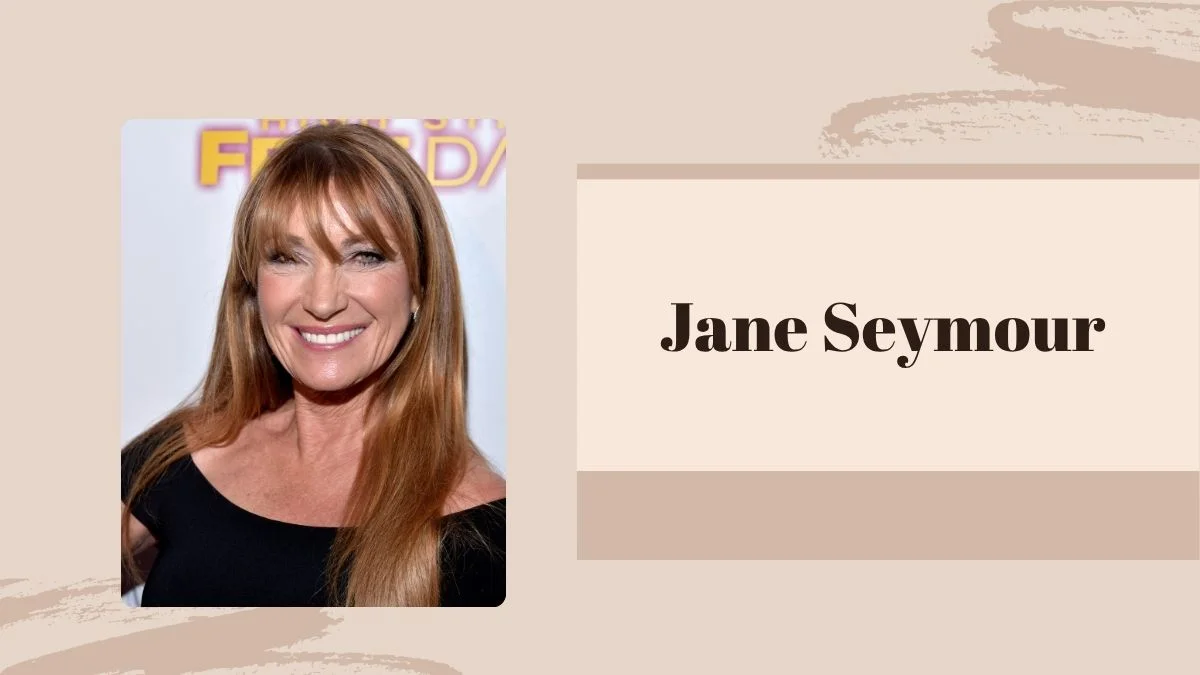
When fans and beauty enthusiasts search for ‘Jane Seymour eyes,’ they are often drawn to one of Hollywood’s most visually distinctive features: a rare ocular condition known as heterochromia iridis. Jane Seymour, born Joyce Penelope Wilhelmina Frankenberg on February 15, 1951, in Uxbridge, Middlesex, England, has captivated audiences for over five decades — and her eyes have likely played a starring role in that fascination.
This article explores the science, the story, and the cultural significance of Jane Seymour’s eyes — offering a unique framework to understand how a natural genetic variation became one of Hollywood’s most recognized and celebrated features.
What Makes Jane Seymour’s Eyes So Distinctive?
The Heterochromia Iridis Phenomenon
Jane Seymour is widely reported to have heterochromia iridis — a condition in which the two eyes display different coloration. One eye is typically described as green, and the other as hazel or brown. This is referred to as complete heterochromia, distinguishing it from partial heterochromia (where a single iris contains more than one color).
From a clinical perspective, heterochromia is most commonly caused by differences in melanin concentration within the iris stroma. It could be congenital (present from birth) or acquired through injury, disease, or medication — though in Seymour’s case, it is believed to be congenital in origin.
| Feature | Detail | Clinical Term |
| Eye Color Variation | Green & Hazel/Brown | Complete Heterochromia |
| Likely Cause | Congenital (genetic) | Melanin asymmetry |
| Population Prevalence | Approx. 1 in 1,000 people | Rare & benign in most cases |
Origins: A Childhood Discovery That Became a Trademark
Jane Seymour grew up in Uxbridge, Middlesex, the daughter of a distinguished gynaecologist and obstetrician, Benjamin Frankenberg, and a Dutch nurse, Mieke van Tricht. From an early age, Seymour was trained as a ballet dancer at the Arts Educational School in London — and it was likely during this formative period that her expressive, mismatched eyes began drawing attention.
Rather than attempting to conceal or minimize her heterochromia, Seymour embraced what made her visually unique. This choice likely served her well in Hollywood, where uniqueness is currency. By the time she played the psychic Bond girl Solitaire in Live and Let Die (1973), her otherworldly appearance — those subtly different eyes included — seemed almost supernaturally suited to the role.
Her eyes are not merely a physical curiosity. They became a narrative device in their own right — contributing to an air of mystery, depth, and emotional range that casting directors, photographers, and audiences found irresistible.
The Jane Seymour Eyes 7-Step Appreciation Framework
For beauty analysts, casting professionals, and fans seeking to understand the full cultural impact of Jane Seymour’s eyes, consider this expert framework:
- Genetic Recognition — Understand that heterochromia iridis is a rare, congenital trait, not a cosmetic enhancement.
- Melanin Mapping — Note the likely differential melanin distribution: one iris exhibits greater eumelanin concentration, lending it a hazel-brown tone; the other reflects lower melanin, appearing green.
- Photographic Impact — Observe how studio lighting interacts differently with each iris, creating a compelling asymmetry on film and in print.
- Character Alignment — Study how her roles (psychic, healer, mystic) were often visually reinforced by her distinctive gaze.
- Aging Gracefully — At 75, Seymour remains a prominent figure; her eyes continue to draw commentary, suggesting timeless visual power.
- Cultural Symbolism — Heterochromia has long been associated with mysticism and heightened perception across many world cultures.
- Community & Identity — Fans and those with heterochromia themselves often cite Seymour as an icon of embracing natural difference with confidence.
How Jane Seymour’s Eyes Shaped Her Career Trajectory
Early Breakthroughs
Seymour made her screen debut as an uncredited extra in the 1969 musical Oh! What a Lovely War. However, her ascent to leading roles was rapid. Her casting in The Onedin Line (1972–1973) and then as Solitaire in Live and Let Die (1973) cemented her as a face — and a gaze — that audiences could not easily forget.
Emmy and Golden Globe Recognition
Her work in Captains and the Kings (1976) earned an Emmy nomination. She went on to win the Golden Globe Award for Best Actress in a Miniseries or Motion Picture for East of Eden (1981). Her expressive eyes were frequently cited by reviewers as contributing to her emotional depth on screen — particularly in dramatic roles where nonverbal communication is paramount.
Dr. Quinn, Medicine Woman
From 1993 onward, Seymour played Dr. Michaela Quinn in the beloved CBS series Dr. Quinn, Medicine Woman. The role ran for six seasons and earned her two Emmy nominations, two Screen Actors Guild nominations, and four Golden Globe nominations (winning one). The character’s compassionate, penetrating gaze — conveyed in no small part through those distinctive eyes — became one of the show’s defining visual signatures.
The Science of Heterochromia: What Research Indicates
From a clinical and genetic standpoint, complete heterochromia iridis such as that reportedly observed in Jane Seymour is considered benign when congenital in origin. Research indicates that the condition is typically linked to variations in the OCA2 and HERC2 genes — which regulate melanin production in the iris.
It is worth noting that heterochromia can occasionally be a secondary symptom of conditions such as Waardenburg syndrome, Horner syndrome, or Fuchs’ heterochromic cyclitis. However, in Seymour’s case, there is no public indication of any underlying medical concern — her heterochromia is likely a standalone, benign genetic expression.
From a visual perception standpoint, research in facial recognition suggests that asymmetric eye color could increase perceived facial memorability — a hypothesis that may partly explain why Seymour’s face has remained so distinctive across decades.
Community & Cultural Impact: Embracing What Makes You Unique
Jane Seymour has long been an advocate for authenticity and open-heartedness — both through her acting and through her nonprofit, the Open Hearts Foundation. The foundation encourages people to live with open hearts, embracing vulnerability and difference rather than hiding it.
In this context, her heterochromia carries deeper symbolic resonance. For the estimated 1-in-1,000 individuals who share this trait, Seymour’s prominence serves as a kind of validation — proof that what sets you apart can become your greatest asset.
Online communities dedicated to heterochromia celebrate Seymour as one of the most visible and respected public figures with the condition. Fan forums, beauty blogs, and ophthalmology education platforms frequently reference her as a touchstone figure, illustrating that heterochromia is not an anomaly to be corrected but a distinction to be celebrated.
Replicating the Look: Makeup Techniques Inspired by Jane Seymour Eyes
While it is not possible to replicate true heterochromia without the use of colored contact lenses, beauty professionals often reference Jane Seymour’s eye aesthetic when discussing techniques that enhance natural eye depth and color variation. Key approaches that could help achieve a similar visual impression include:
- Dual-tone eyeshadow application: Using two complementary shades — one warmer (amber, copper) and one cooler (forest green, sage) — on each eye to create deliberate asymmetry.
- Limbal ring enhancement: Darkening the outer edge of the iris with a deep brown liner to increase the perceived depth and definition of lighter-colored eyes.
- Illuminating inner corner highlight: A pearl or gold highlighter at the inner corner draws light toward the iris, amplifying the appearance of lighter eye tones.
- Individual lash application: Fine, individually applied lashes at the outer corners frame the eyes without overwhelming natural asymmetry.
- Neutral base, expressive iris: Keeping the rest of the makeup understated allows the eyes themselves to carry the visual weight — a principle Seymour’s own looks have often demonstrated.
Summary Checklist: Key Facts About Jane Seymour Eyes
| Jane Seymour has heterochromia iridis — one green eye and one hazel/brown eye. |
| Her heterochromia is believed to be congenital, not caused by injury or disease. |
| Complete heterochromia affects approximately 1 in 1,000 people worldwide. |
| Her distinctive eyes contributed to casting in iconic roles including Solitaire (Bond girl) and Dr. Michaela Quinn. |
| Research indicates heterochromia linked to OCA2/HERC2 gene variation affecting iris melanin. |
| Seymour’s Open Hearts Foundation aligns philosophically with embracing natural uniqueness. |
| Beauty professionals reference Jane Seymour’s eye aesthetic when teaching asymmetric makeup techniques. |
| She remains one of the most publicly recognized figures with heterochromia in entertainment history. |
Featured Image: Toglenn, CC BY-SA 4.0 https://creativecommons.org/licenses/by-sa/4.0, via Wikimedia Commons