
Few eye shapes command as much fascination — or as much cultural mystique — as upturned eyes. From the smoky gaze of Angelina Jolie to the ethereal allure of Kendall Jenner, this distinctive eye shape has long been a hallmark of the most iconic faces in entertainment and fashion.
Whether you were born with naturally upturned eyes or are simply drawn to understanding what makes this eye shape so captivating, this comprehensive guide covers everything: the anatomy behind the shape, the celebrities who carry it best, and the evidence-informed makeup techniques most likely to enhance it.
What Are Upturned Eyes? The Anatomy Explained
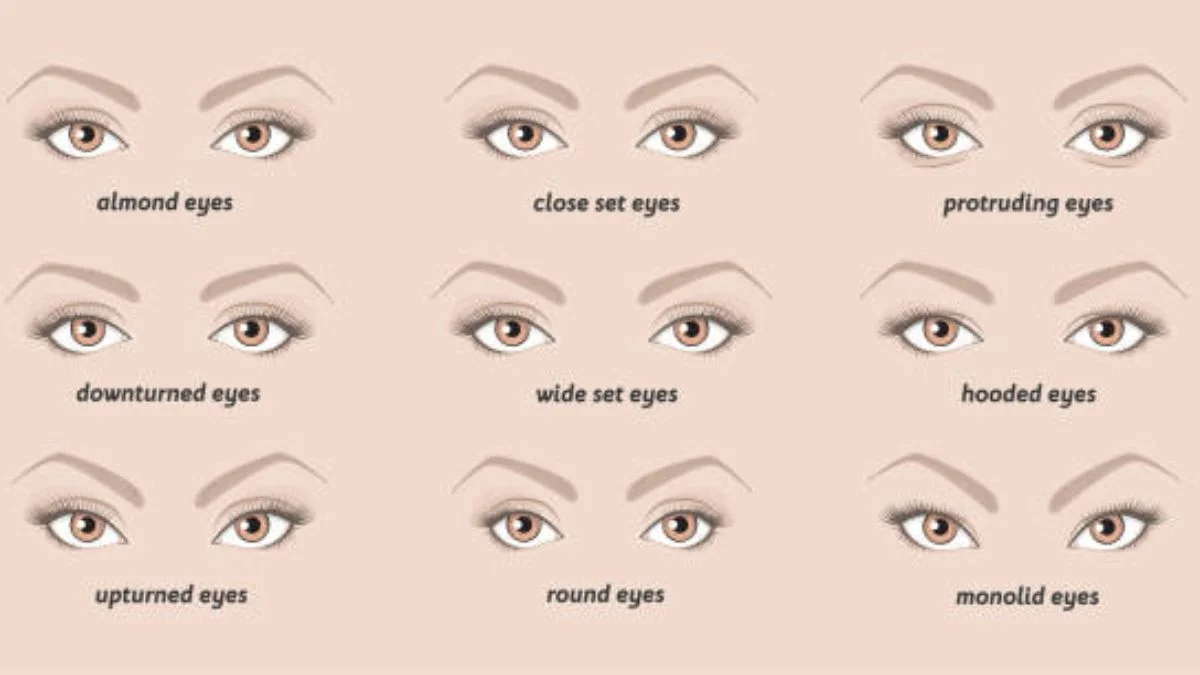
Upturned eyes — sometimes referred to as uptilted or cat eyes — are characterized by an outer corner (lateral canthus) that sits higher than the inner corner (medial canthus). In anatomical terms, this creates a positive canthal tilt, meaning the axis of the eye slopes gently upward from the inner to the outer corner.
This is the defining feature that sets upturned eyes apart from almond eyes, round eyes, or downturned eyes. The degree of the tilt can range from subtle to dramatic, influencing the overall impression the face projects.
Key Anatomical Characteristics
- Positive canthal tilt: outer corner sits higher than the inner corner
- Lifted outer lid: the upper eyelid appears to curve upward near the temple
- Elongated appearance: often creates a sleek, horizontal optical illusion
- Visible iris: usually more of the iris is visible on the inner side
Eye Shape Comparison at a Glance
| Eye Shape | Canthal Tilt | Outer Corner | Common Association |
| Upturned | Positive (+) | Higher than inner | Cat-eye, feline, exotic |
| Downturned | Negative (–) | Lower than inner | Soft, doe-eyed, romantic |
| Almond | Neutral / slight + | Tapered ends | Balanced, versatile |
| Round | Neutral | Same level, curved | Open, youthful |
| Hooded | Variable | Hidden by brow bone | Deep-set, mysterious |
Origins & Cultural Significance: A Shape Through the Ages
The fascination with upturned eyes is far from a modern phenomenon. In ancient Egyptian art, kohl-lined eyes were deliberately drawn with an upward flick at the outer corner — an early cosmetic homage to the feline gaze associated with the goddess Bastet, symbolizing protection and grace.
In East Asian aesthetics, the term ‘phoenix eyes’ (丹鳳眼, dān fèng yǎn) has historically described a similar shape — eyes with a lifted outer corner considered a marker of beauty, wisdom, and noble bearing. This cultural reverence persisted through dynasties and is still celebrated in contemporary beauty culture across China, Korea, and Japan.
In Western beauty discourse, the so-called ‘cat-eye’ craze of the 1950s — popularized by silver screen icons like Audrey Hepburn and Marilyn Monroe — brought upturned eye aesthetics into mainstream cosmetic practice. Today, the winged liner trend that dominates global beauty tutorials is, at its core, an attempt to replicate the lifted effect of naturally upturned eyes.
Celebrities With Upturned Eyes: The A-List Hall of Fame
Some of the world’s most recognizable faces are distinguished, at least in part, by their upturned eye shape. While individual anatomy always varies, the following celebrities are frequently cited by makeup artists, aestheticians, and beauty editors as notable examples of a positive canthal tilt.
| Celebrity | Field | Notable Eye Characteristic |
| Angelina Jolie | Acting / Philanthropy | Pronounced positive tilt, deep-set with dramatic lift |
| Kendall Jenner | Modeling / Media | Subtle upturned almond hybrid, elongated |
| Megan Fox | Acting | Strong outer lift, often enhanced with winged liner |
| Bella Hadid | Modeling | Defined lateral canthus, high outer corner |
| Adriana Lima | Modeling | Wide-set with gentle upward tilt |
| Cara Delevingne | Modeling / Acting | Prominent tilt with thick brow framing |
| Zhang Ziyi | Acting | Classic phoenix eye proportions |
| Zendaya | Acting / Music | Almond-upturned blend, high outer sweep |
It is worth noting that perceived eye shape can be influenced by factors such as brow position, facial structure, and makeup application. The above examples represent commonly observed assessments rather than clinical measurements.
The Upturned Eyes 7-Step Enhancement Method
Professional makeup artists working with models and actors have developed nuanced approaches to working with — and accentuating — upturned eye shapes. The following framework, distilled from industry practice and aesthetic consultation principles, offers a structured approach likely to yield optimal results.
Step 1 — Map Your Canthal Axis
Before applying any product, identify the exact angle of your canthal tilt by drawing an imaginary line from your inner to outer corner. This axis should inform every liner, shadow, and lash decision that follows. A steeper positive angle may benefit from techniques that balance rather than amplify; a subtle tilt may welcome further enhancement.
Step 2 — Prime the Lid for Longevity
Apply an ophthalmologist-tested eye primer across the entire lid and lower lash line. This step is especially relevant for upturned eyes, as the outer corner — the focal point of this shape — tends to experience more crease migration due to its elevated position.
Step 3 — Choose Your Shadow Architecture
For upturned eyes, most professional makeup artists recommend a ‘reverse V’ or ‘windswept’ technique: placing darker shadow on the outer upper corner and blending inward and slightly downward. This approach can soften an extremely acute tilt or deepen a more subtle one, depending on desired effect.
Step 4 — Apply Liner With Intentional Direction
Liner placement is arguably the most consequential step for upturned eyes. A common guideline is to draw the upper lash line following the natural curve, then choose the flick angle deliberately. Extending the wing parallel to the lower lash line (rather than following the upper lid angle) is thought to create a more balanced silhouette. A small downward-angled wing at the outer corner is sometimes used to gently counterbalance a very pronounced tilt.
Step 5 — Address the Lower Lash Line Strategically
On the lower lash line, limiting liner to the inner two-thirds — rather than extending it fully to the outer corner — can help preserve the eye’s natural lift while keeping the look fresh. Alternatively, a thin smudged line running to the outer corner may enhance depth without appearing overpowering.
Step 6 — Select Lashes That Complement the Curve
For upturned eyes, lashes that are longer or more volumized at the center rather than the outer corners may create a more harmonious effect. Lashes with a dramatic flare at the outer corner could intensify the tilt significantly — which may be the desired outcome for editorial looks, though likely less suitable for everyday wear.
Step 7 — Blend, Assess, and Refine
Step back and assess the eye from multiple angles and in natural light. The outer corner is the signature feature of upturned eyes; any harshness there should be softened with a clean blending brush. Minor asymmetry between eyes is entirely normal and should not be a cause for concern — the goal is balance that reads well at conversational distance.
Quick-Reference Makeup Tips for Upturned Eyes
| Technique | Recommended | Use With Caution |
| Eyeliner flick | Horizontal or slight downward angle | Steep upward flick (overamplifies tilt) |
| Shadow placement | Darker shade on outer upper corner | Very heavy outer V (can appear heavy) |
| Lower lash line | Inner 2/3 definition only | Full lower line extension |
| False lashes | Center-volume or natural curl | Extreme outer flare styles |
| Brow shape | Slightly arched, not over-lifted | Very high arch (adds visual tilt) |
| Highlighter | Inner corner and brow bone | Excessive lower lid shimmer |
Common Misconceptions About Upturned Eyes
Misconception 1: Upturned Eyes Always Look ‘Cat-Like’
While upturned eyes are often associated with the feline aesthetic, this is not universally the case. The overall impression depends heavily on eye size, spacing, brow position, and facial structure. A person with wide-set, large upturned eyes may project a more doe-like or open quality rather than a predatory cat-eye effect.
Misconception 2: Winged Liner Suits Everyone With Upturned Eyes
Winged liner can enhance upturned eyes beautifully — but it is not a universal prescription. For individuals with a very pronounced positive tilt, a heavy wing may create an overly acute angle that some find unflattering. Individual preference and experimentation remain the most reliable guides.
Misconception 3: This Eye Shape Is Exclusive to Certain Ethnicities
Upturned eyes occur across all ethnic and racial groups. While a positive canthal tilt is commonly noted in discussions of East Asian eye shapes, it is found with equal frequency in individuals of European, African, South Asian, and mixed heritage. Attributing this eye shape exclusively to any single group is both anatomically inaccurate and culturally reductive.
The Upturned Eyes Community: Share, Learn, and Connect
One of the most rewarding developments in modern beauty culture is the emergence of dedicated communities where people with shared eye shapes exchange tips, tutorials, and encouragement. Platforms such as Reddit (notably r/MakeupAddiction and r/AsianBeauty), YouTube, and TikTok host thousands of tutorials specifically tailored to upturned, almond, and cat-eye shapes.
If you have upturned eyes and are navigating your own makeup journey, consider engaging with these communities. Crowdsourced knowledge from individuals who share your exact eye anatomy can often be more immediately applicable than generalized advice — and the sense of connection that comes from being seen and understood is genuinely valuable.
Makeup artists and estheticians reading this guide are encouraged to contribute their own frameworks and observations. The more rigorously we document technique for specific eye shapes, the richer and more accessible the collective knowledge becomes for everyone.
Summary Checklist: Upturned Eyes at a Glance
- Identify your canthal axis before beginning any eye makeup look
- Prime lids thoroughly, with extra attention to the outer corner
- Use the windswept or reverse-V shadow technique for depth
- Direct liner flicks horizontally or slightly downward for balance
- Limit lower lash line liner to the inner two-thirds for most looks
- Choose lashes with center volume rather than extreme outer flare
- Assess from multiple angles and in natural lighting before finalizing
- Explore beauty communities tailored to upturned and cat-eye shapes